

Building a product innovation and development practice for future digital experiences supporting immigrants, international students, and refugees.
CONTEXT
Building a product innovation practice
World Education Services (WES) is a 50-year-old, non-profit organization that helps immigrants, international students, and refugees to Canada and the United States achieve their goals through academic credential evaluation and related services. WES forecasted a future of slow or flat growth in its core credential evaluation business. To address this, it established a new product innovation team with a goal of exploring opportunities that could provide sustainable revenue while advancing WES’ mission and social impact.
I joined this team as a user experience designer. Together, we partnered with directors, researchers, business development leaders, and subject-matter experts to identify unmet needs and develop new product concepts. Our mandate was to validate those opportunities before decisions could be made about focused investment and scaling. Rather than improving an existing product, our work focused on shaping what the organization could build next through research, prototyping, and experimentation.
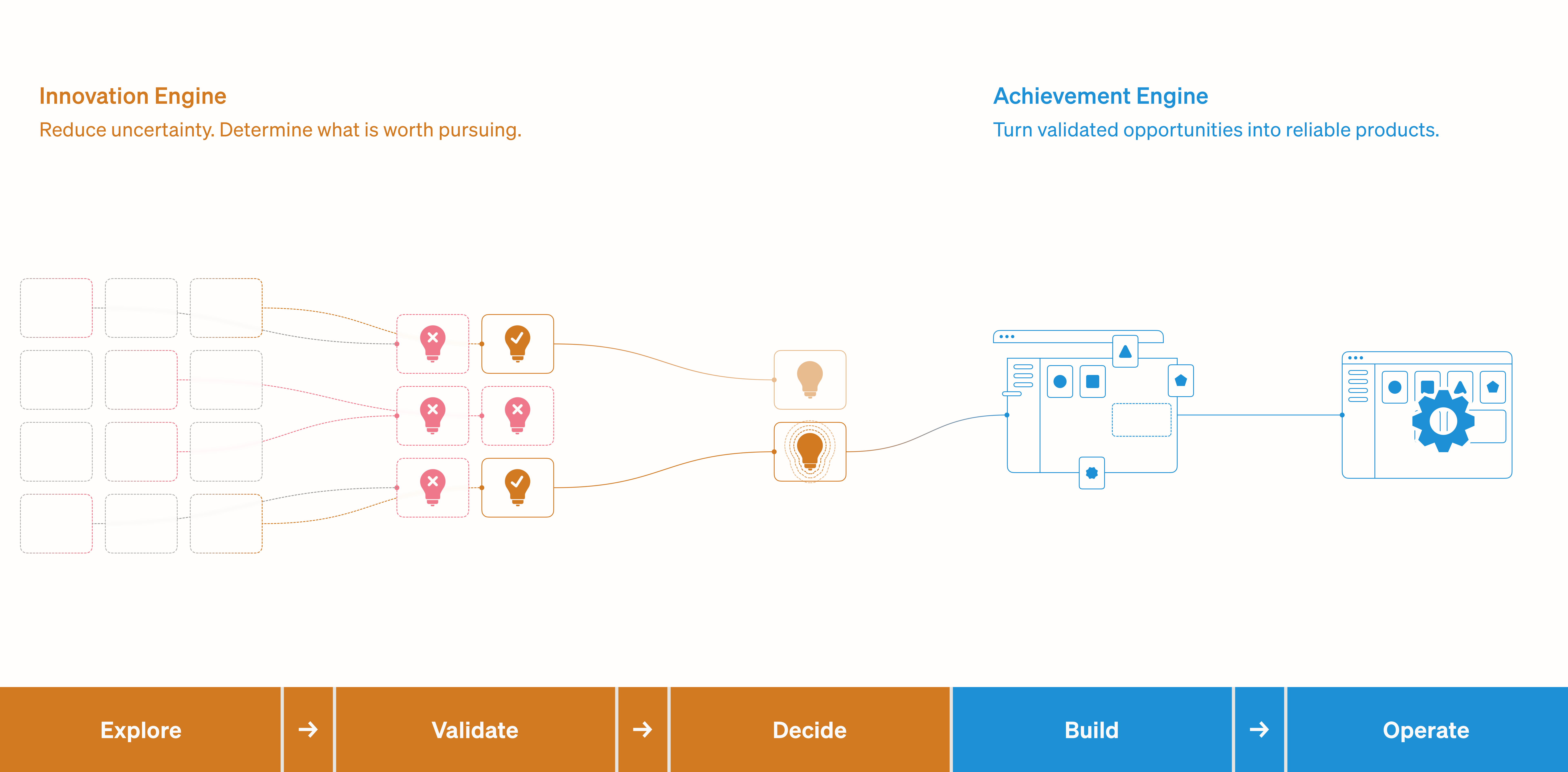
Our teams work often began with ideas rather than clearly defined customers, workflows, or requirements. We first had to figure out which problems were worth solving. Just as importantly, we needed to understand who would value a potential solution. This ambiguity also extended to my role.
As WES’s first and only UX designer, I often worked in spaces where few established product-development or UX practices existed. Making the case for user-centered design wasn’t simply a matter of applying a process. Finding consensus could also be difficult. I had to establish an approach while doing the work itself. Just as importantly, I had to consistently engage stakeholders to align on what a good experience could be and why it mattered.

APPROACH
Defining what good looks like
The team’s absence of product development muscle challenged me to articulate my own understanding of design and its role in creating good digital experiences and product teams. I began thinking not only about the qualities of the experiences we created—quality, legibility, structure—but also about the practices that shaped them, including collaboration, inclusiveness, and awareness of bias. Together, these ideas expanded my own conception of what a good design practice could be.
Each product experiment became an opportunity to put these ideas into practice. I brought UX methods and acts of making into a process that was being established in real time. Whether developing user personas, testing ideas with immigrants and prospective customers, iterating on feedback, or mapping end-to-end experiences, I pushed the team to look beyond individual interactions and consider our work more holistically.
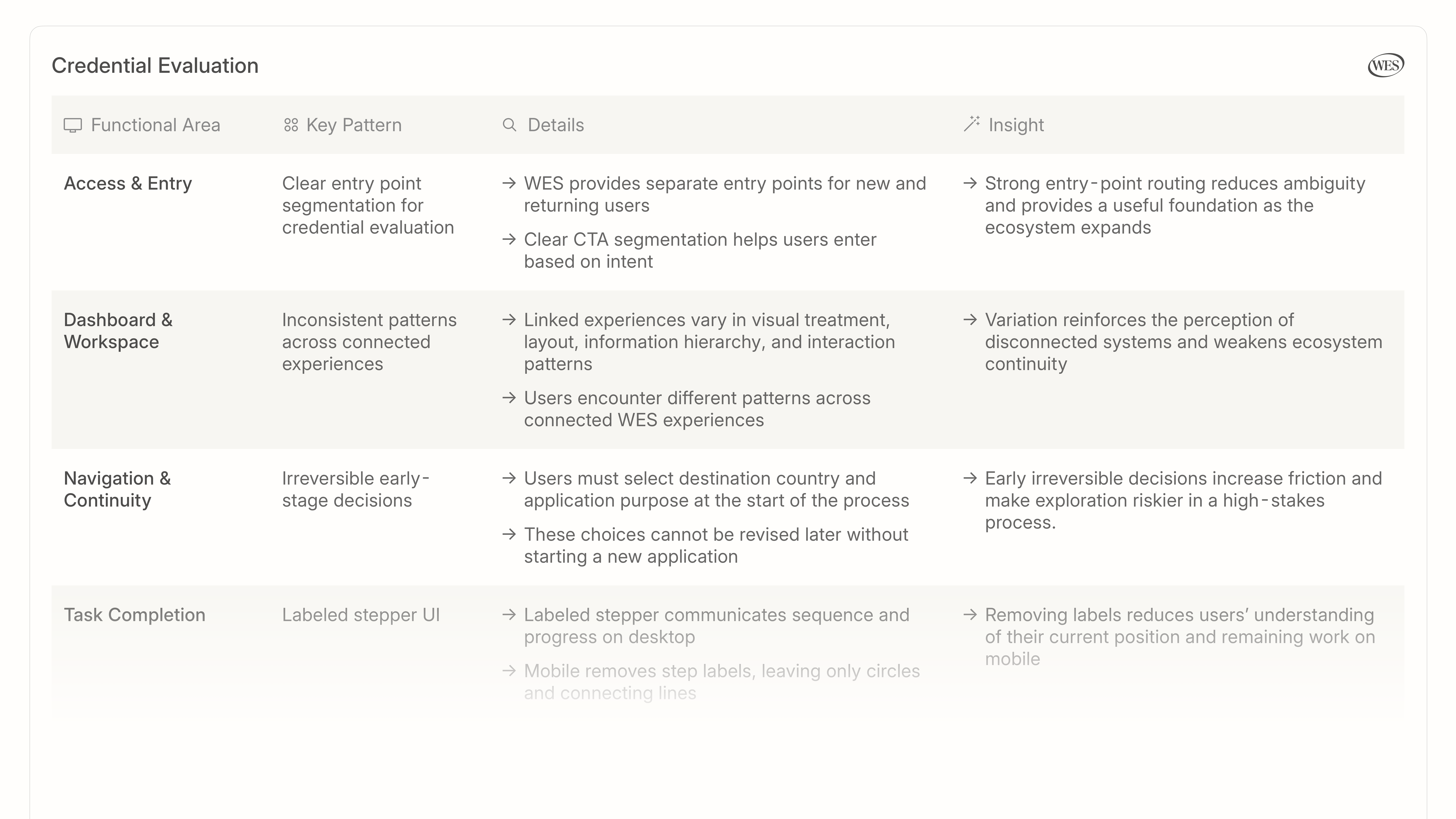
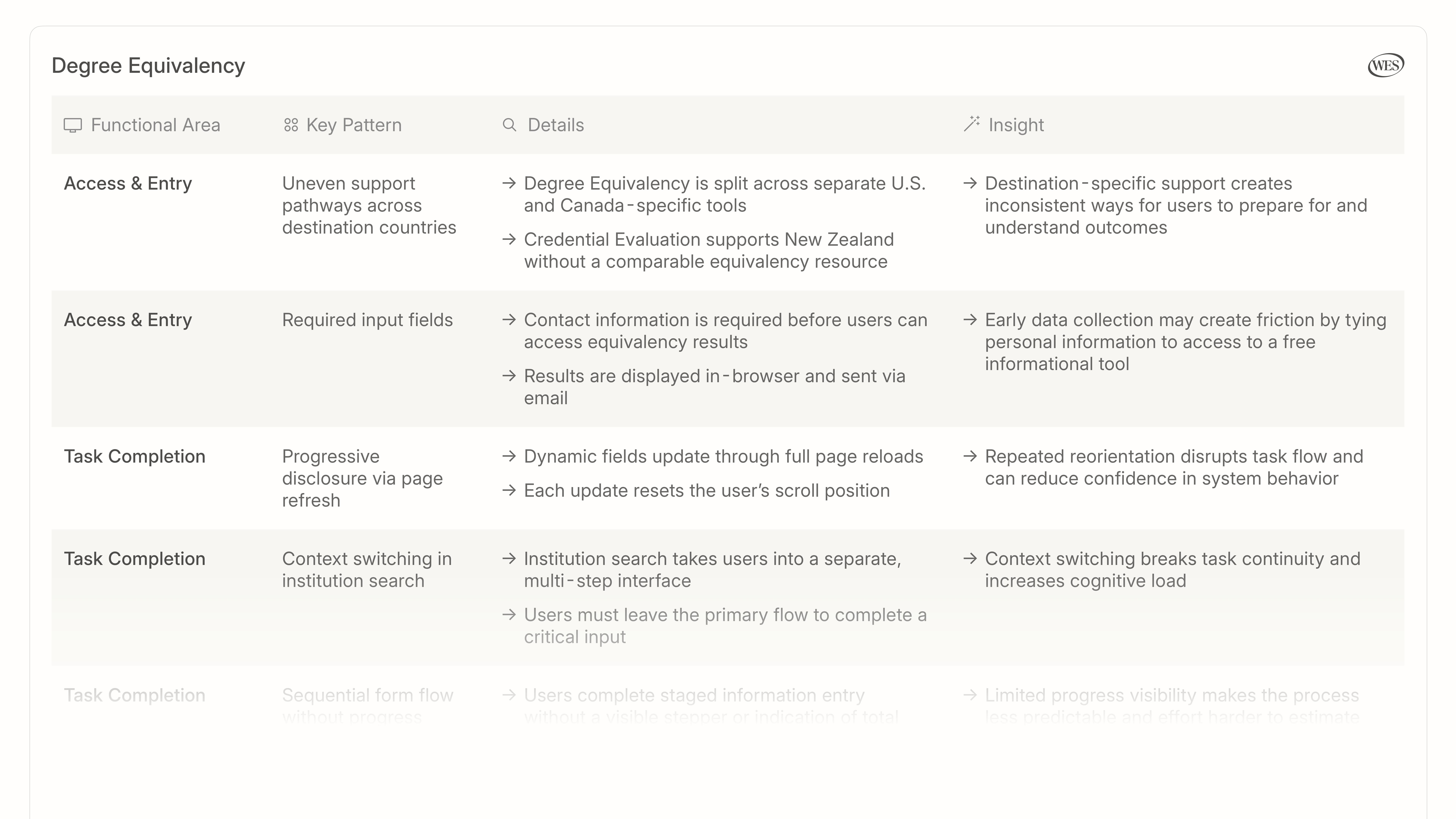
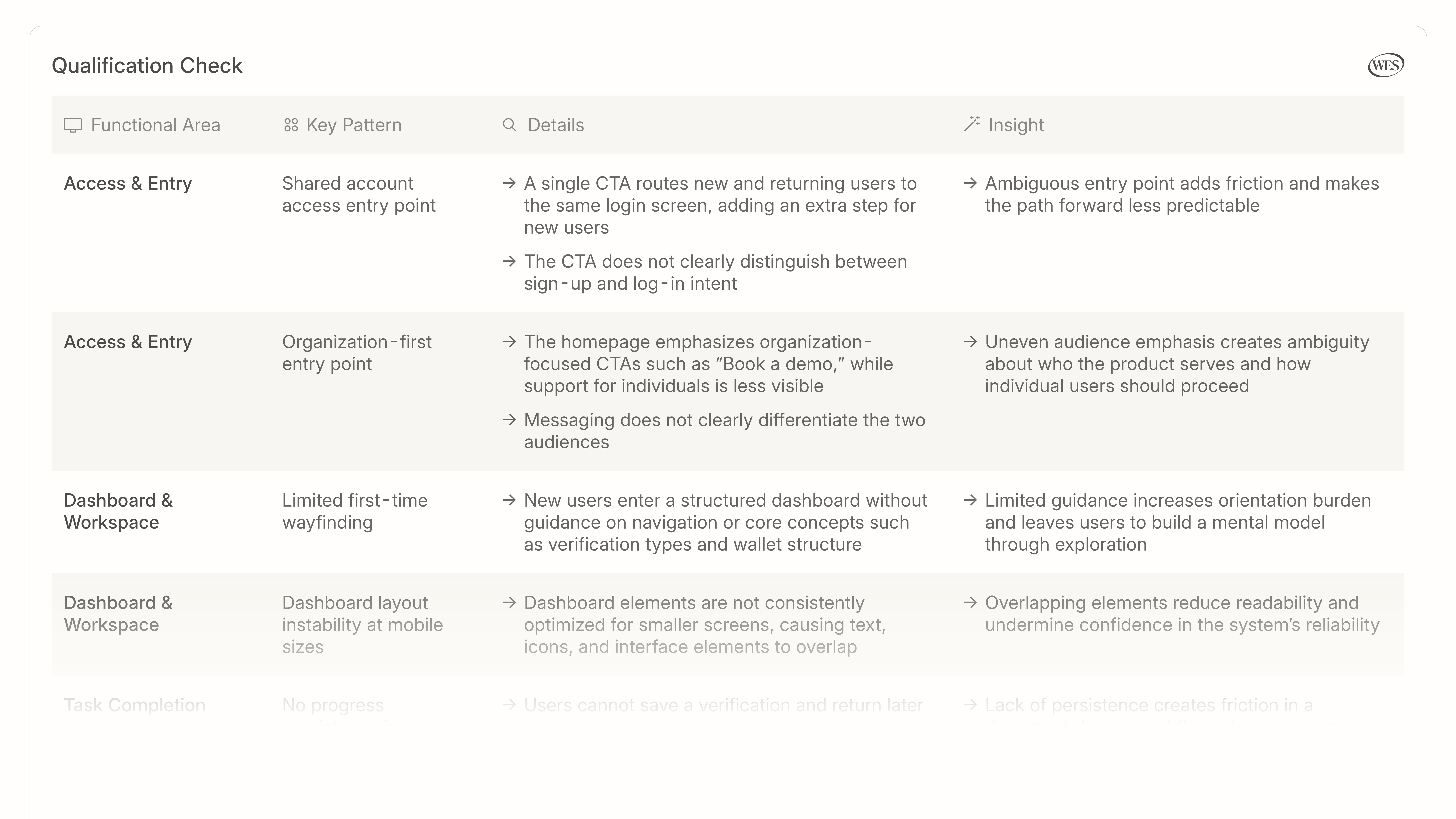
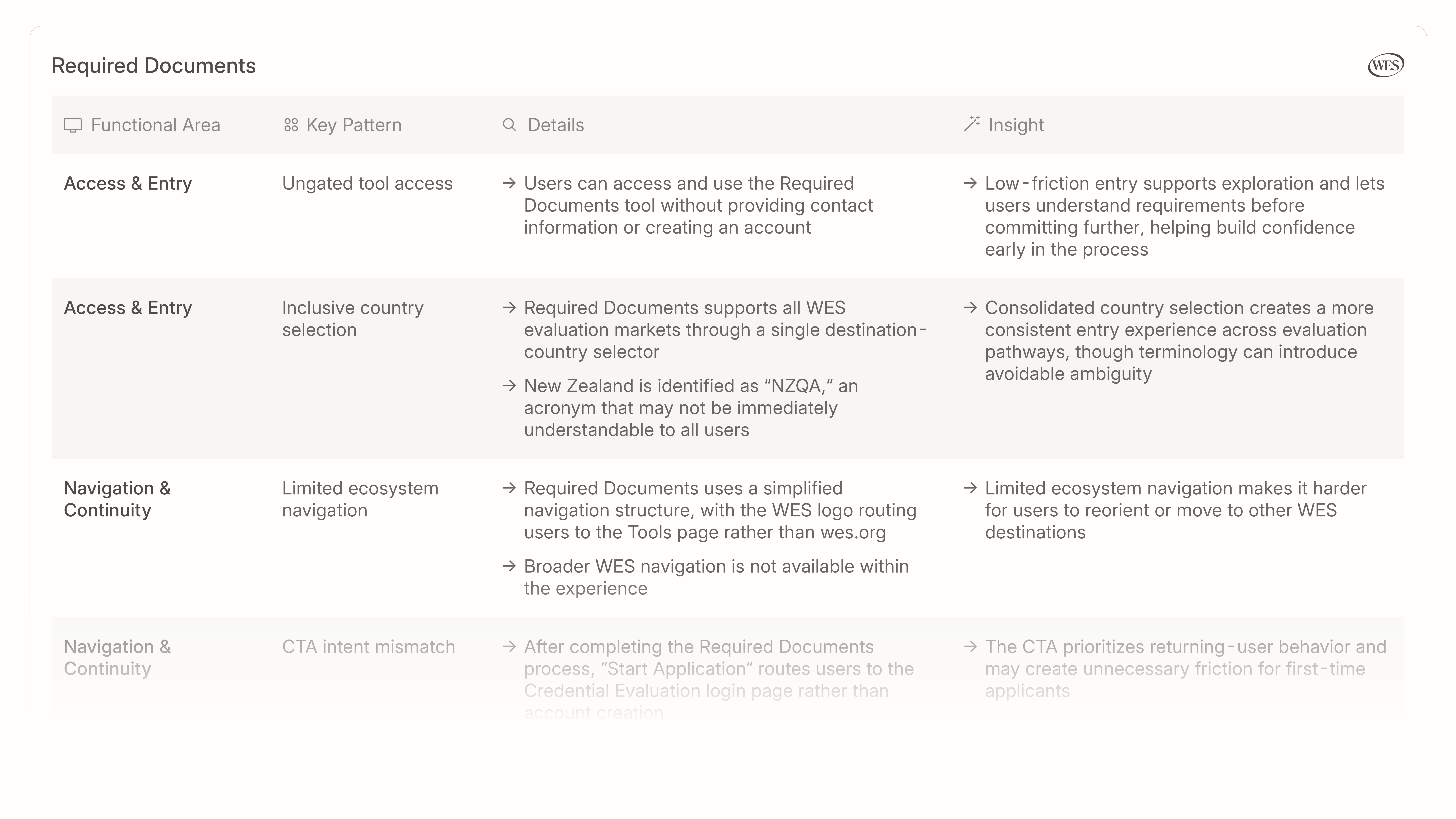
One way I did this was by thinking more broadly about WES’ product strategy. What were the strengths and weaknesses of the existing ecosystem? How would new products fit into this collection of offerings? I conducted an audit of WES’s products and services to identify relationships, gaps, duplication, and fragmentation. The work gave us concrete examples of where experiences succeeded or broke down, strengthening the case for thinking about products as part of a larger system.
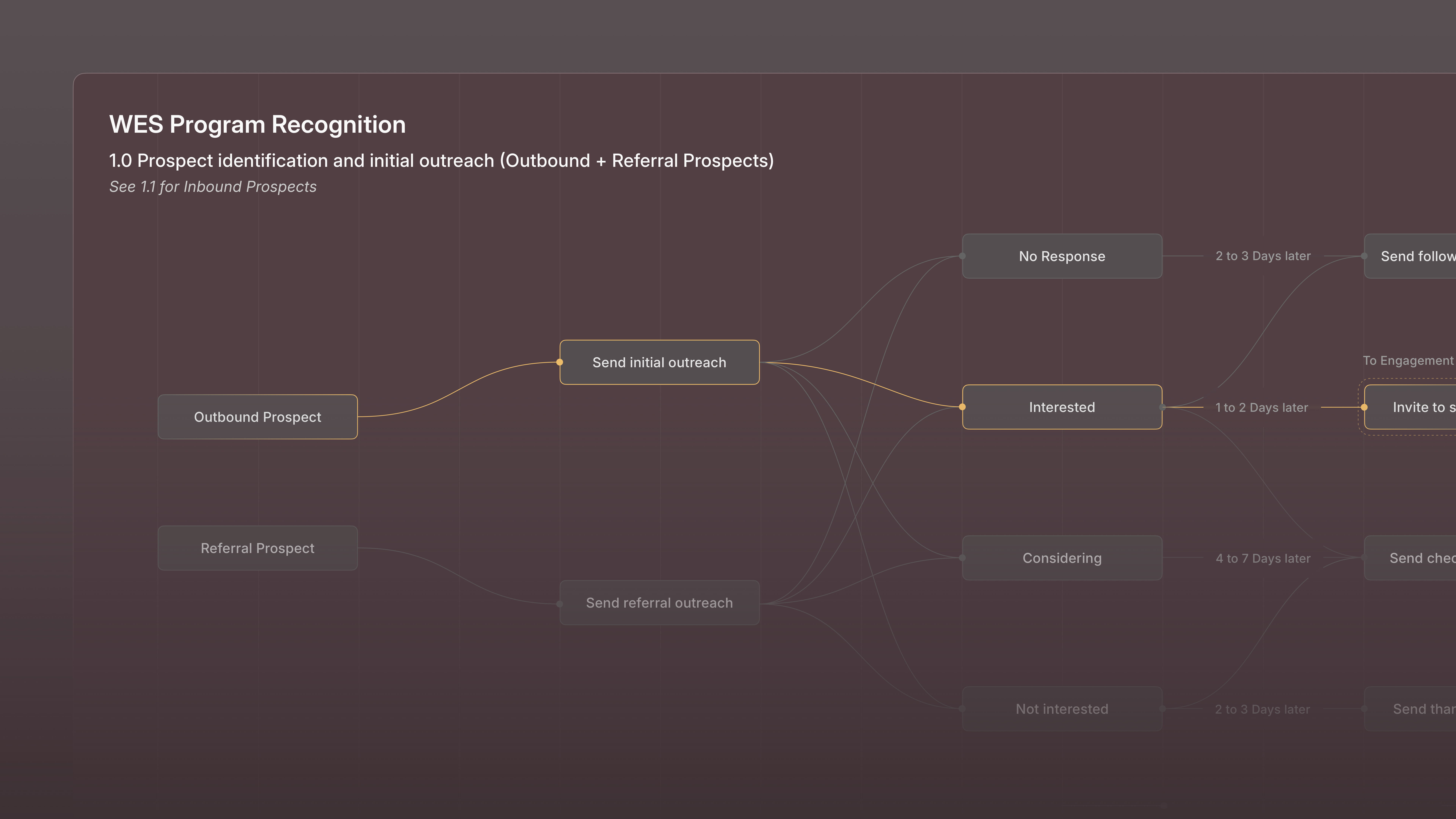
For a B2B product experiment the team explored targeting universities outside of Canada and the United States (WES Program Recognition), I led a collaborative process with stakeholders to map and develop the customer lifecycle. The map made the experience visible to the team, allowing us to think about the product from initial awareness and discovery through ongoing engagement. This shared view of the service helped bridge gaps that existed across different touch points, teams, and stages of the relationship.
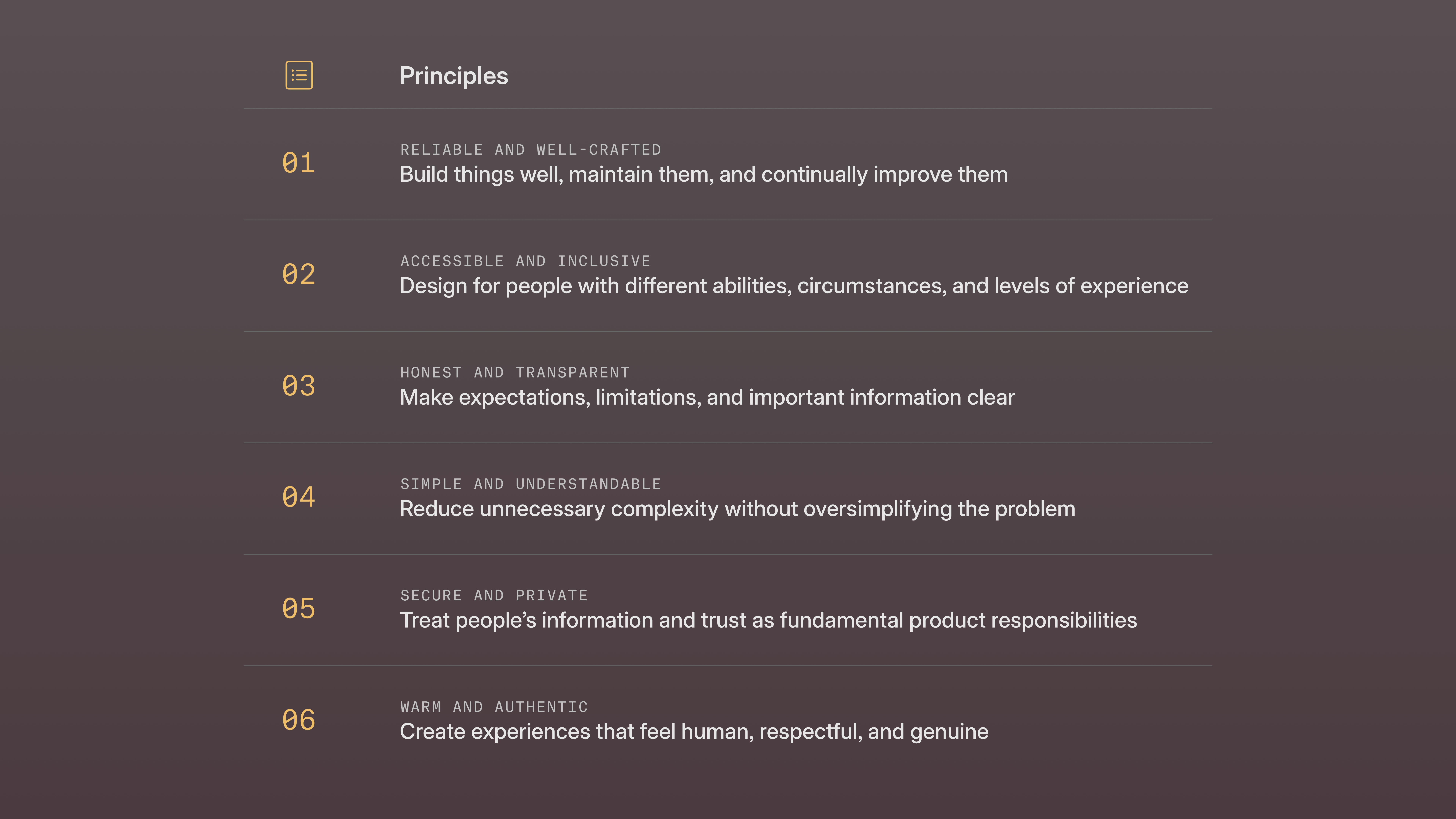
Complementing this work were practices that helped turn individual product decisions into shared experience standards. I developed design principles, conducted competitive analysis, and created other artifacts that gave the team a common basis for evaluating ideas. A recurring question became:
“What are we proposing that is better than what already exists?”
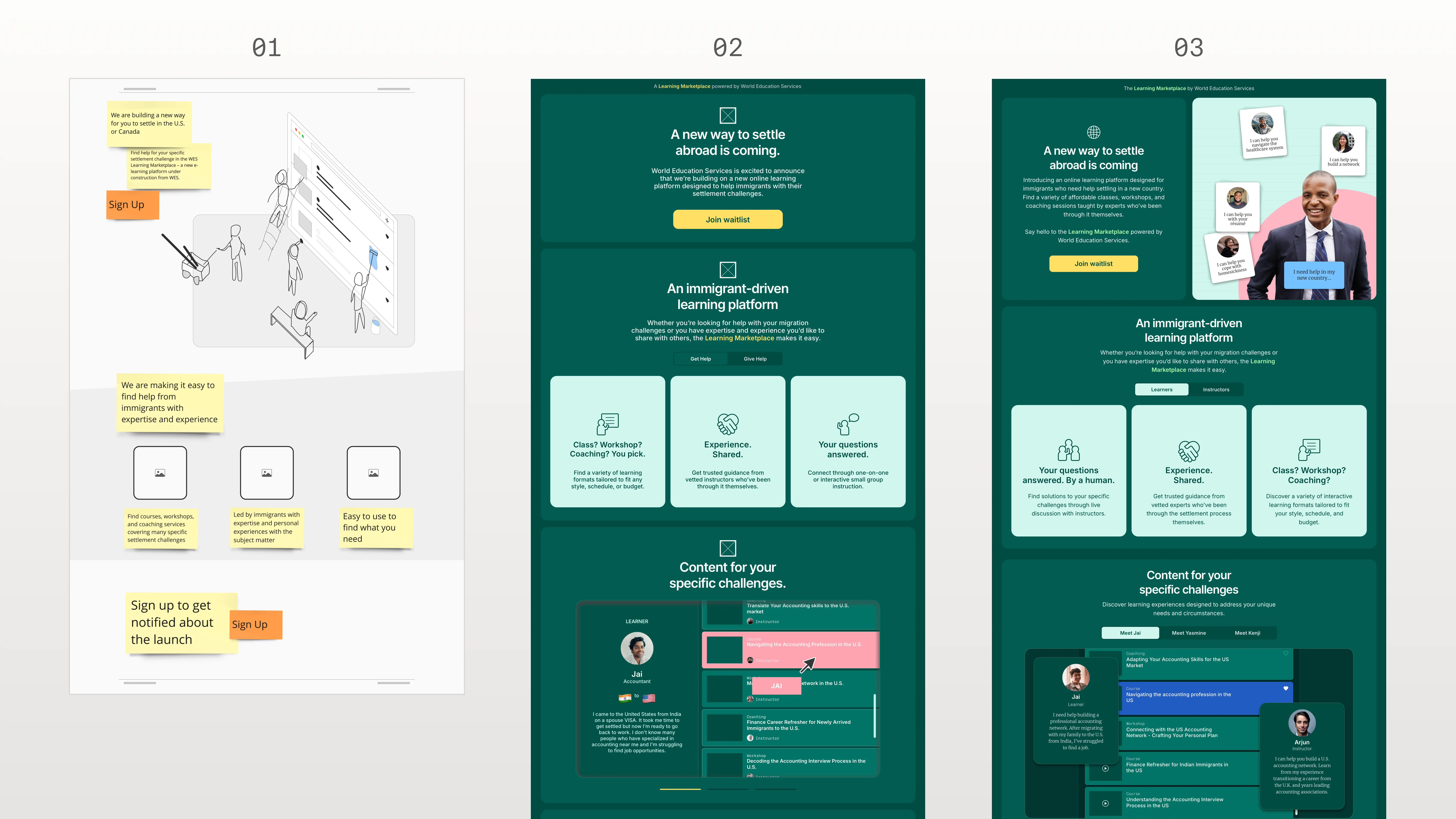
As ideas became more concrete, the act of making became another way to put this broader design practice into action. I helped turn concepts into tangible artifacts that could be shared and tested with users, stakeholders, and developers. We wanted to understand whether the proposition made sense, where people encountered friction, which assumptions needed to change before investing further, and whether our work was living up to the design and development practices we were establishing.
I brought the same mindset to projects outside the innovation team, sharing the practices we were developing with other teams across the organization. While collaborating with WES’s Global Education and Knowledge team on a web experience consolidating data on education systems from countries across the globe, I saw an opportunity to bring users into a process that up until then was being shaped primarily on internal subject-matter expertise and opinion on what worked. I advocated for external testing so the team could assess not only the usability of the experience, but whether the data and information being collected actually served the needs of its intended audience.
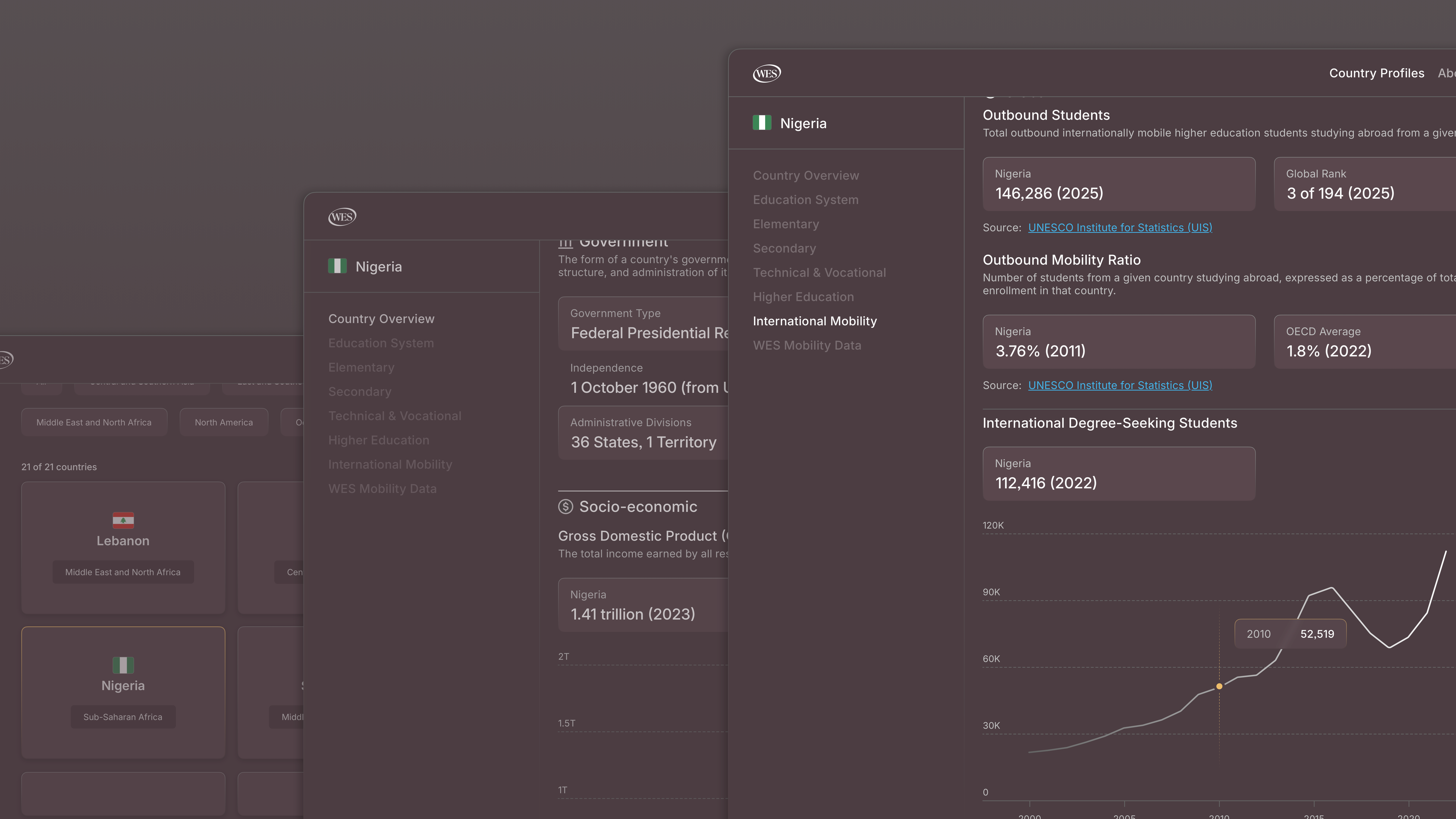
The team ultimately gave the go-ahead to test the experience externally, introducing user feedback and iterative design into the product development process.
“This is what I like, that it does show outbound students, at least how many people are outbound and then outbound mobility ratio. This is good to know.”
Across these projects, the practice began to take shape. We brought users into decisions earlier, made ideas tangible enough to test, and used evidence to determine what deserved further investment. The team became more confident in research, prototyping, and testing, while the artifacts and methods we developed gave us a shared language for discussing the work.
IMPACT
Making better bets
The impact of this work was not a single successful product. Rather, it was a stronger ability to learn before making larger commitments. By bringing users, evidence, and iterative design into the process earlier, we could test assumptions, identify where experiences needed to improve, and make more informed decisions about what to pursue next.
One clear example of this was a series of experiments I helped build for a class marketplace concept we explored from 2023 to 2025. We progressively increased our commitment as we learned, using each stage to address the questions and uncertainties that emerged along the way. We started by testing the concept with a survey, then explored willingness to pay for classes through Eventbrite. A teaser website gave us an opportunity to test the proposition with a broader audience, while the resulting waitlist helped determine what classes a fuller marketplace should offer and recruit instructors. We then used those learnings to build a marketplace MVP.
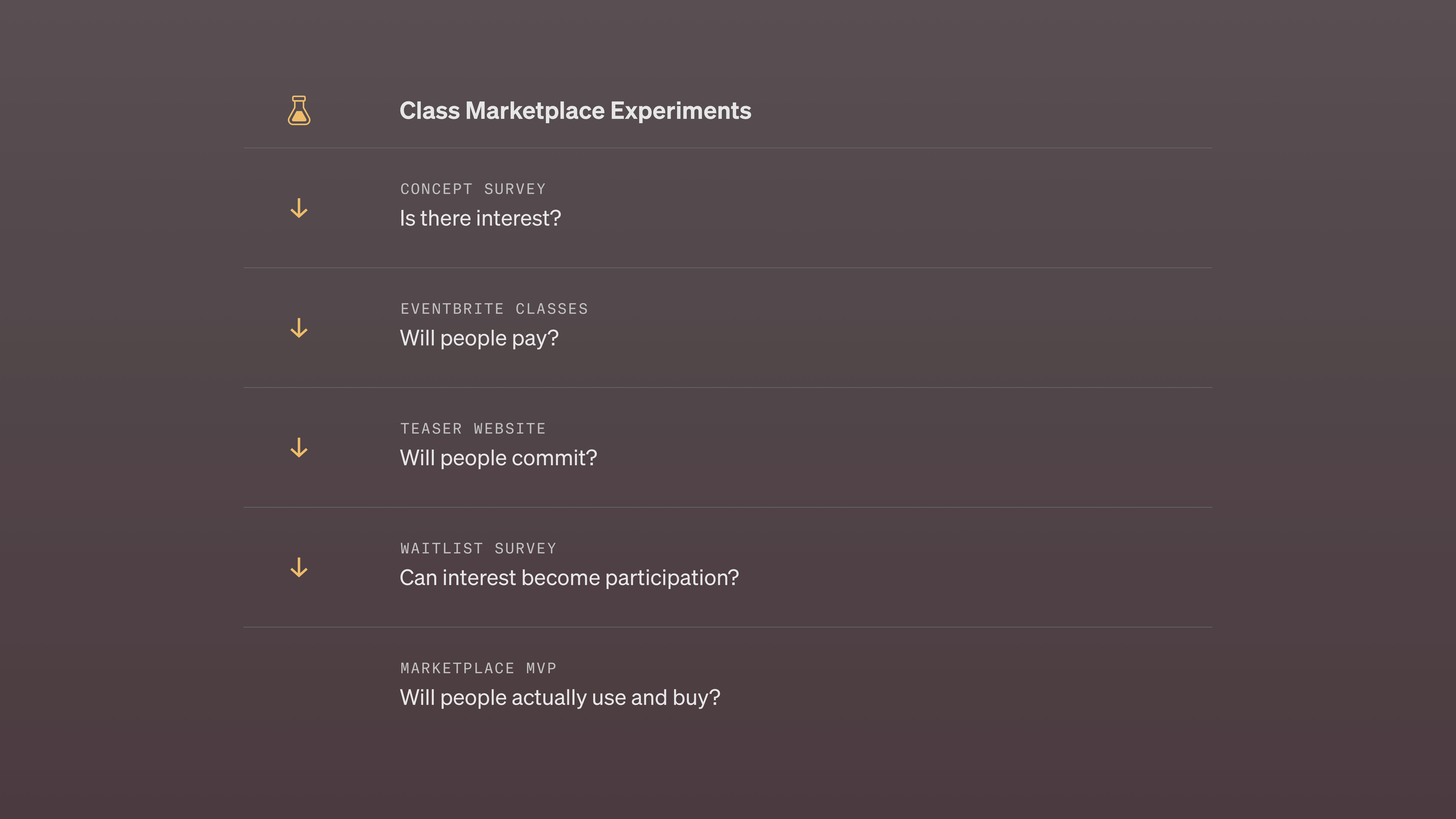
At each stage, I brought UX practices into the process. This turned assumptions into increasingly concrete experiences we could put in front of people and learn from.
For the teaser website experiment, I focused the experience around the moments that mattered most. This included how the hero and “join waitlist” CTA contributed to conversion. We used feedback from testing to refine the messaging and make the experience feel clear, professional, and welcoming within the first few seconds. This was particularly important for our target audience: recently settled immigrants to the United States in need of career help. They needed to quickly understand the relevance of the offering and feel that they could trust it.
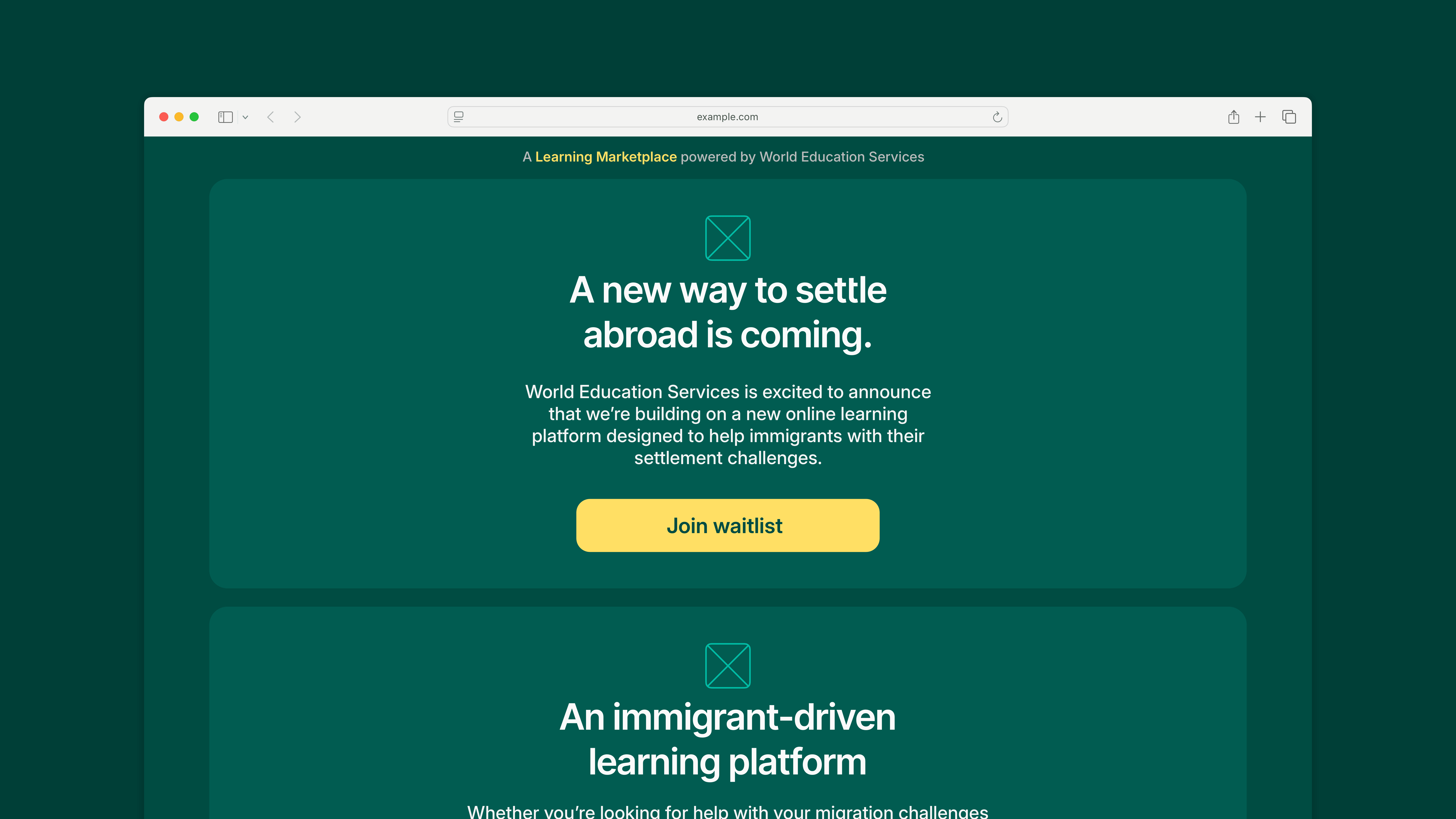
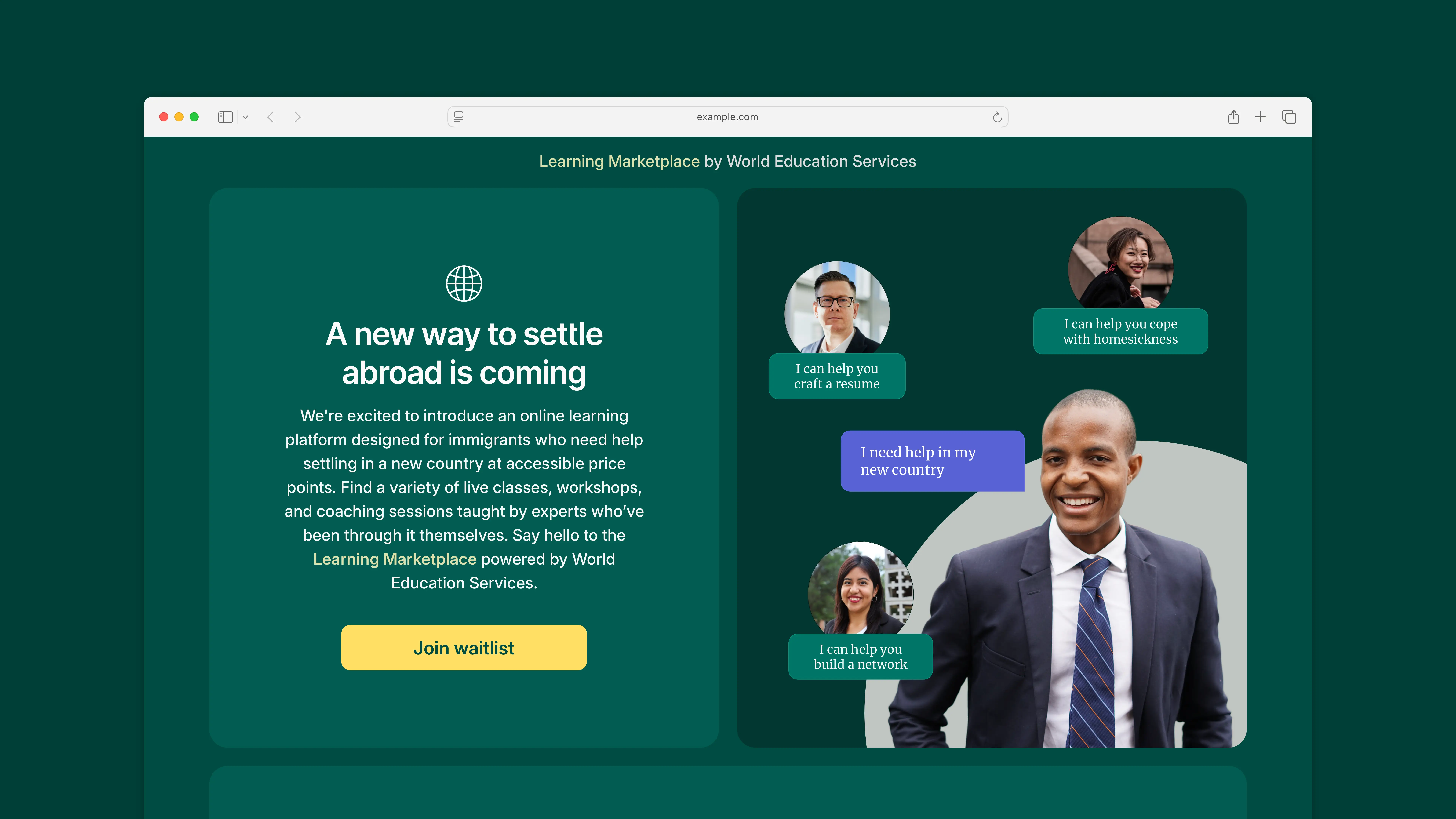
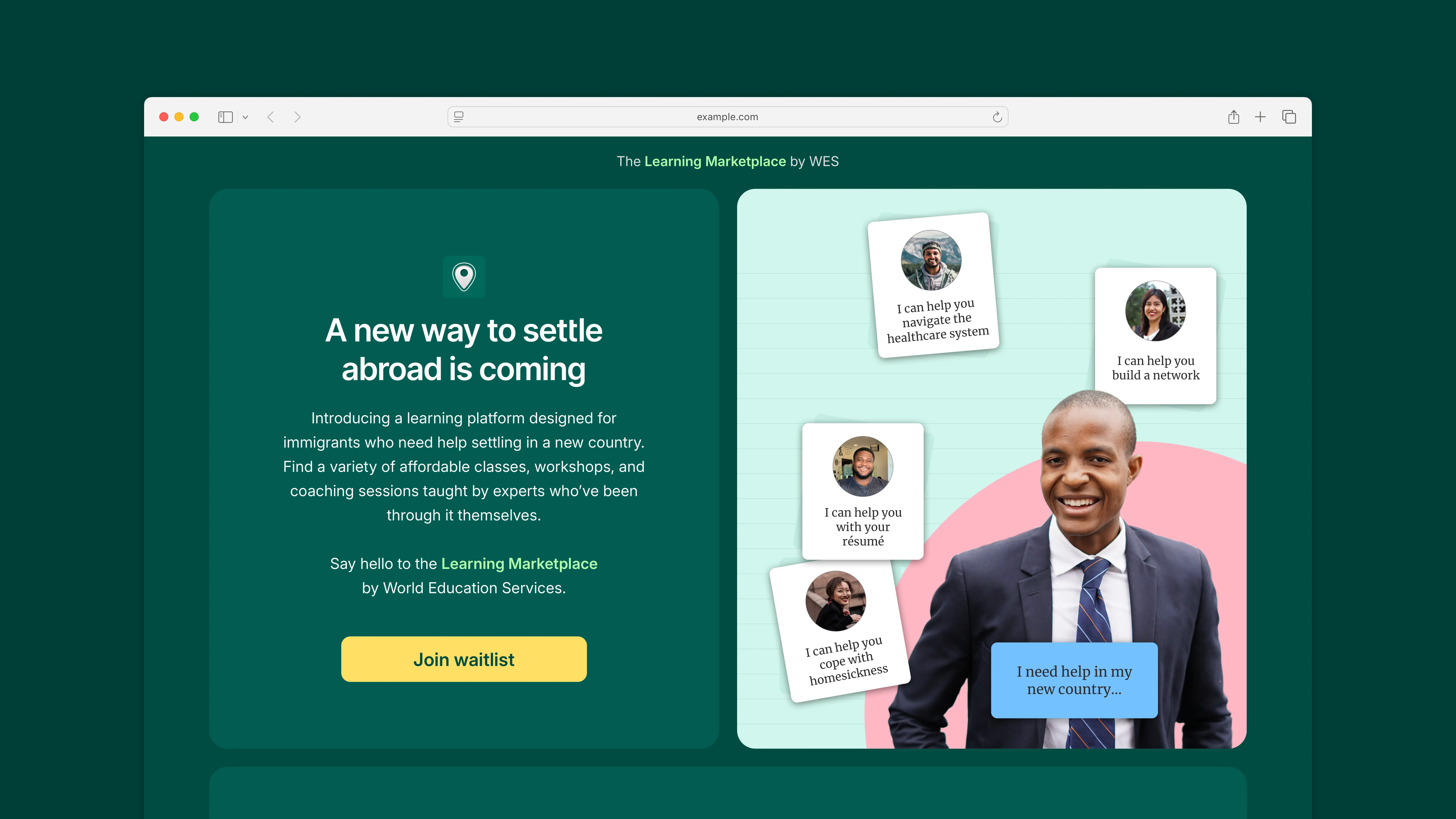
In the end, 2,200+ people joined the waitlist, exceeding the team target of 200. More than 26% of unique visitors converted, 2.6 times our team’s conversion benchmark and 6.9 times the documented industry benchmark. This was particularly notable because roughly 90% of traffic came from email campaigns whose open and click-through rates were below both WES and industry benchmarks.
The response to the teaser website gave us enough confidence to build a more complete version of the marketplace concept. We launched an MVP with 40+ classes, 35 instructors, and a range of price points. As the closest iteration of the concept we’d developed to date, this experiment was designed to test whether the variety of solutions that had resonated in our earlier research would translate into deeper engagement and more purchases.
Metrics gathered in the first six months showed extremely low account creation and engagement, reinforcing concerns I had about the experience and its ability to communicate value. The marketplace ran on a third-party LMS. Getting it operational with a small team in a short timeframe meant making tradeoffs about what we could address before launch. I had identified several experience shortcomings before launch. The early results gave me the evidence needed to revisit those tradeoffs with the broader team.
My hypothesis was that the first-touch experience and other key parts of the journey weren’t yet offering a level of quality or professionalism our target audience found credible. I led an initiative to strengthen the landing page, class catalog, class pages, and account experience in an effort to improve key metrics.
The first major initiative was to rethink the design of the landing page and our messaging strategy. We were not speaking to our target audience and their career and job-related challenges in a way that gave them confidence in our solution. Our initial landing page relied on a small set of customizable components provided by the LMS. While I knew a new landing page alone would not solve the purchase problem, it was a tangible improvement I believed could strengthen the first-touch experience, encourage further exploration, and increase account creation.
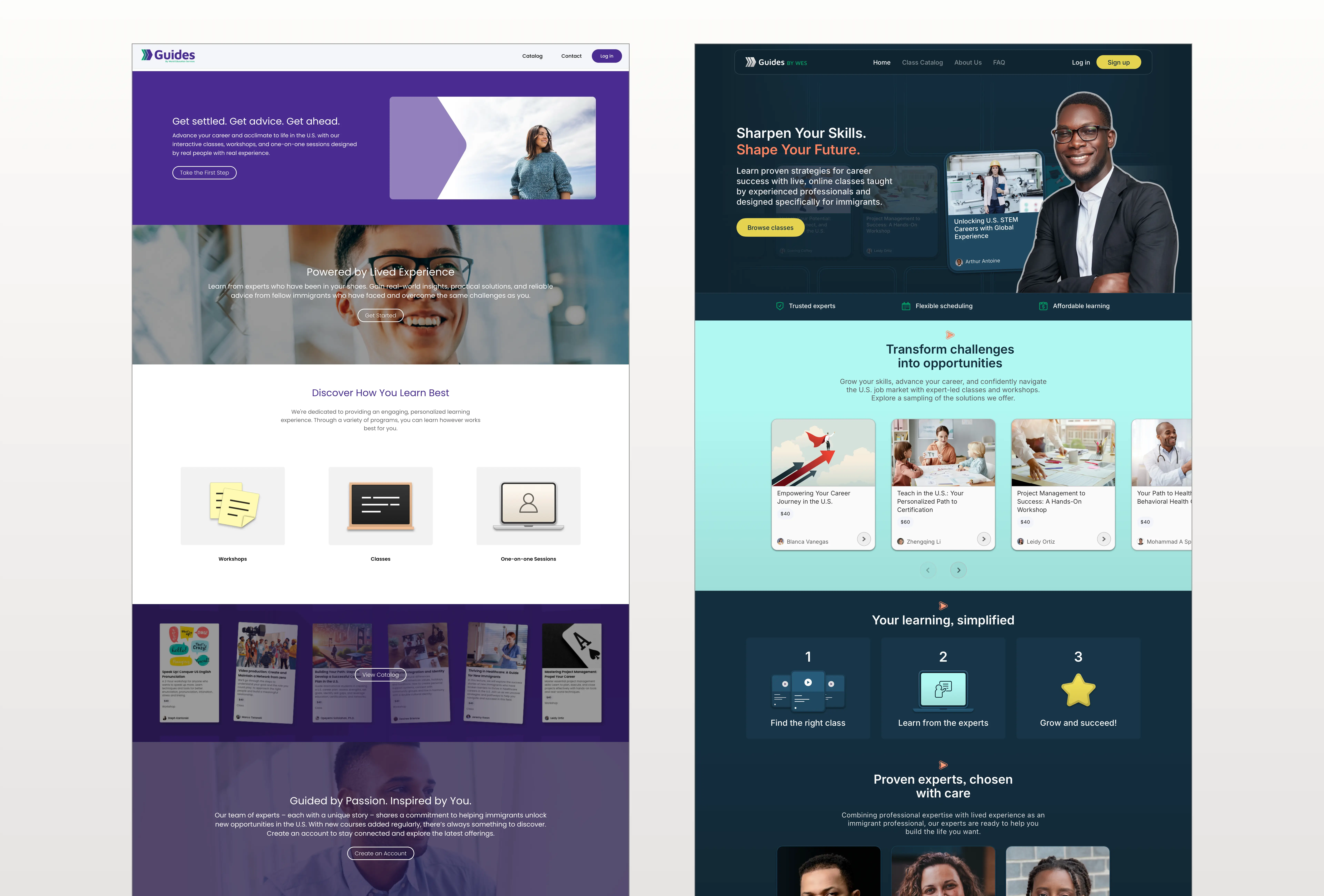
This hypothesis was quickly validated. Visitor-to-account conversion increased from 7% to more than 9%, while total class-page views increased 126%. Additionally, inquiries about learning content, pricing, and the platform increased from roughly one user question every two weeks to three per week. We measured these metrics over equivalent periods following each launch announcement, using focused marketing campaigns to drive traffic.
“Everything feels really clean and easy to navigate. As someone who has gone through the immigration process, I can say that the tone of the [landing] page is exactly what’s needed: supportive, warm, and not overwhelming.”
The results were particularly notable given that we launched the first iteration of the experiment with a marketing campaign comprised of multiple emails, while the second iteration that included the redesigned landing page was supported by a single email. Together, the results gave us evidence that changes to the quality of our first-touch experience and messaging influenced how people engaged with and came to trust the product, even though purchases remained a challenge that required improvements deeper in the experience.
The value of these efforts extended beyond any individual experiment. By bringing UX practices into a team that was still developing its product-development capabilities, I helped establish a more deliberate way to turn uncertainty into evidence and evidence into decisions. The work also demonstrated how design could contribute beyond the interface itself. UX became a way to frame problems, challenge assumptions, prioritize efforts, test ideas, and involve users earlier in the process.
What I brought to WES was not a formula for finding successful products, but a way of thinking and working that made experimentation more purposeful. In a context where this practice was not yet fully formed, I helped make UX part of how the organization thought about the things it made.