
A multi-year effort to modernize Corel PHOTO-PAINT’s core color and tone editing experience while making the case for continued investment in a legacy product.
CONTEXT
The case for an overlooked creative application
Corel PHOTO-PAINT is a raster image editing application included in CorelDRAW Graphics Suite (CDGS), a cross-platform collection of professional design tools for Windows, macOS, and web. Used by millions globally, the suite supports a diverse range of creative fields including graphic design, photography, signage and print production, technical drawing, apparel design, illustration, and digital content creation.
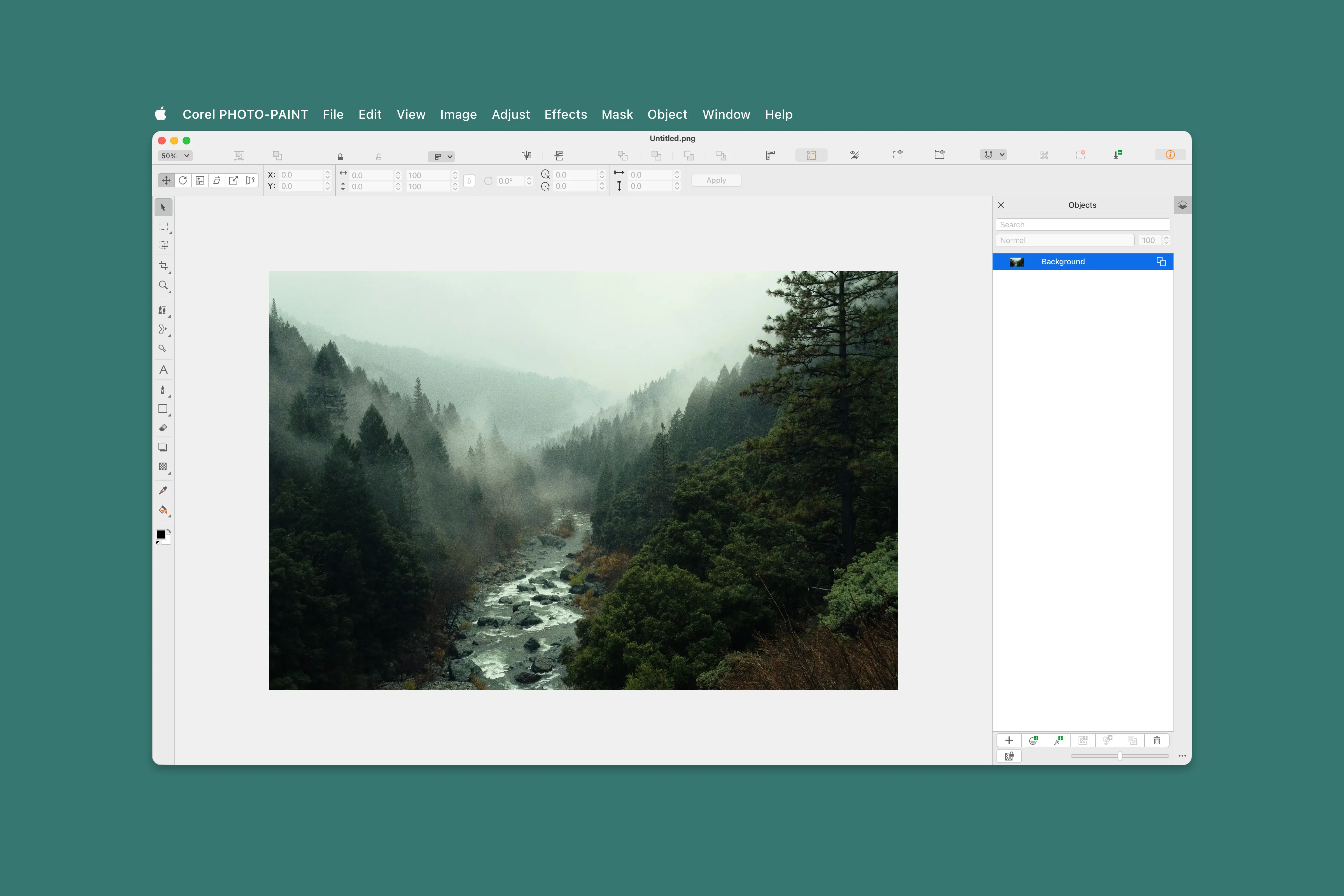
Over time, investment in its development was superseded by a narrow focus on CorelDRAW, the suite’s better-known vector graphics editor. While features were introduced to PHOTO-PAINT sporadically over the years, the most critical and heavily used editing experiences remained relatively unchanged. This neglect left the application outmoded and unable to meet the needs of a contemporary photo editing workflow.
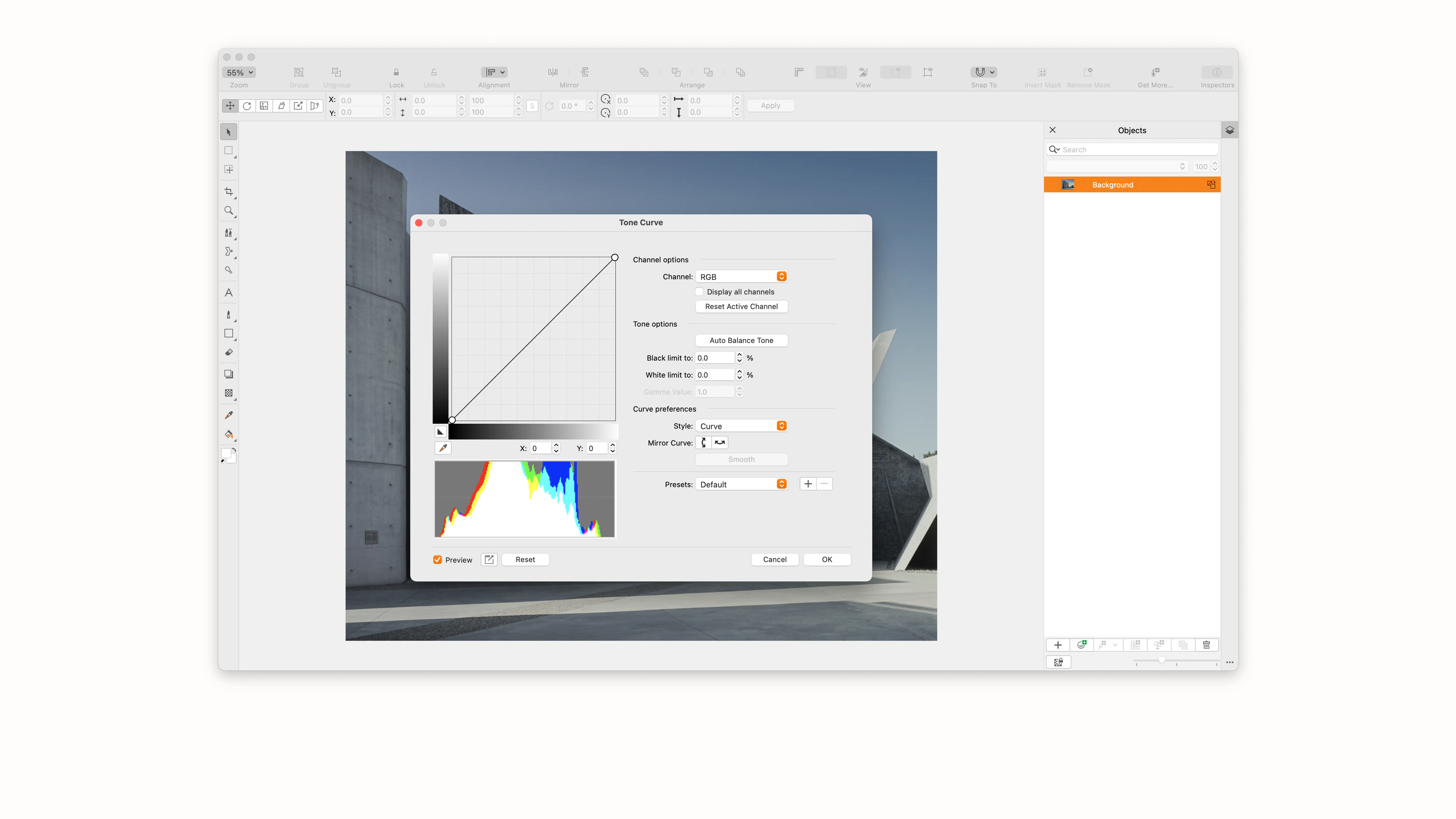
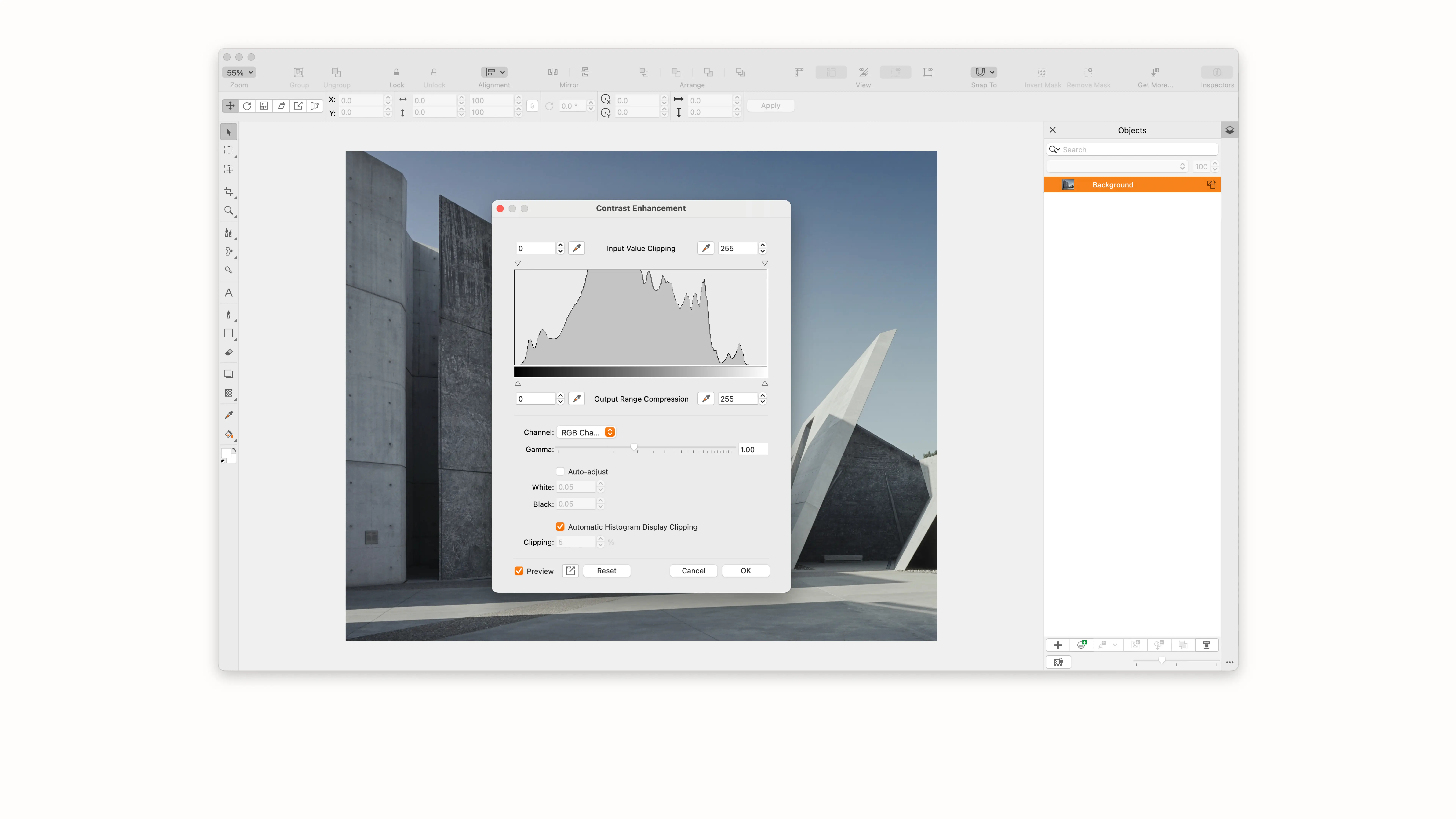
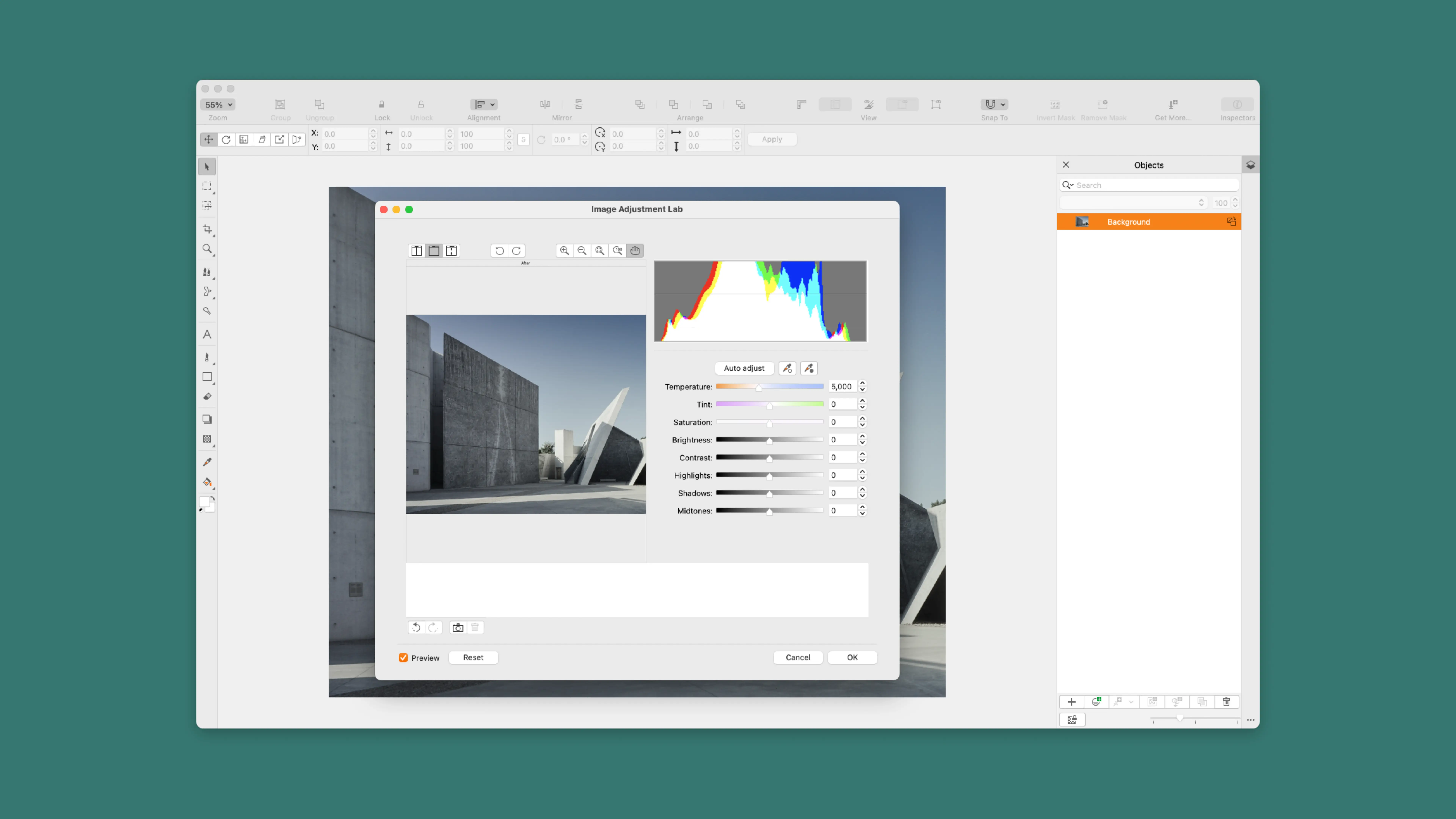
Among the most significant opportunities was Adjustments. This was the application’s primary workflow for correcting and enhancing an image's color and tone. Users relied on it daily for common editing tasks such as hue and level adjustments, tone mapping, and color replacement. Sitting at the centre of nearly every image editing session, these tools shared a common, dialog-based interaction model. Modernizing this workflow therefore meant rethinking the editing experience as a whole rather than treating each filter independently.
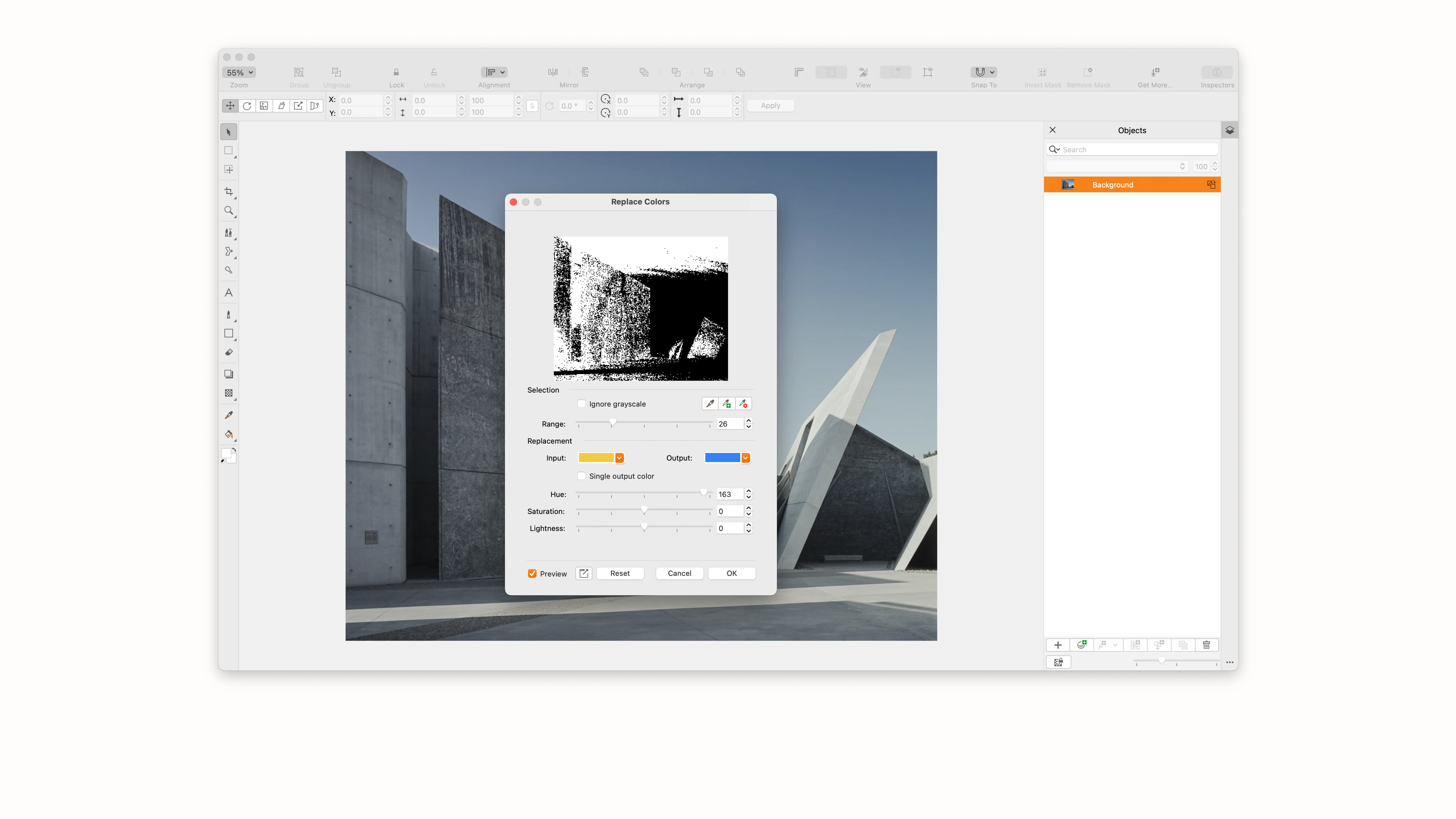
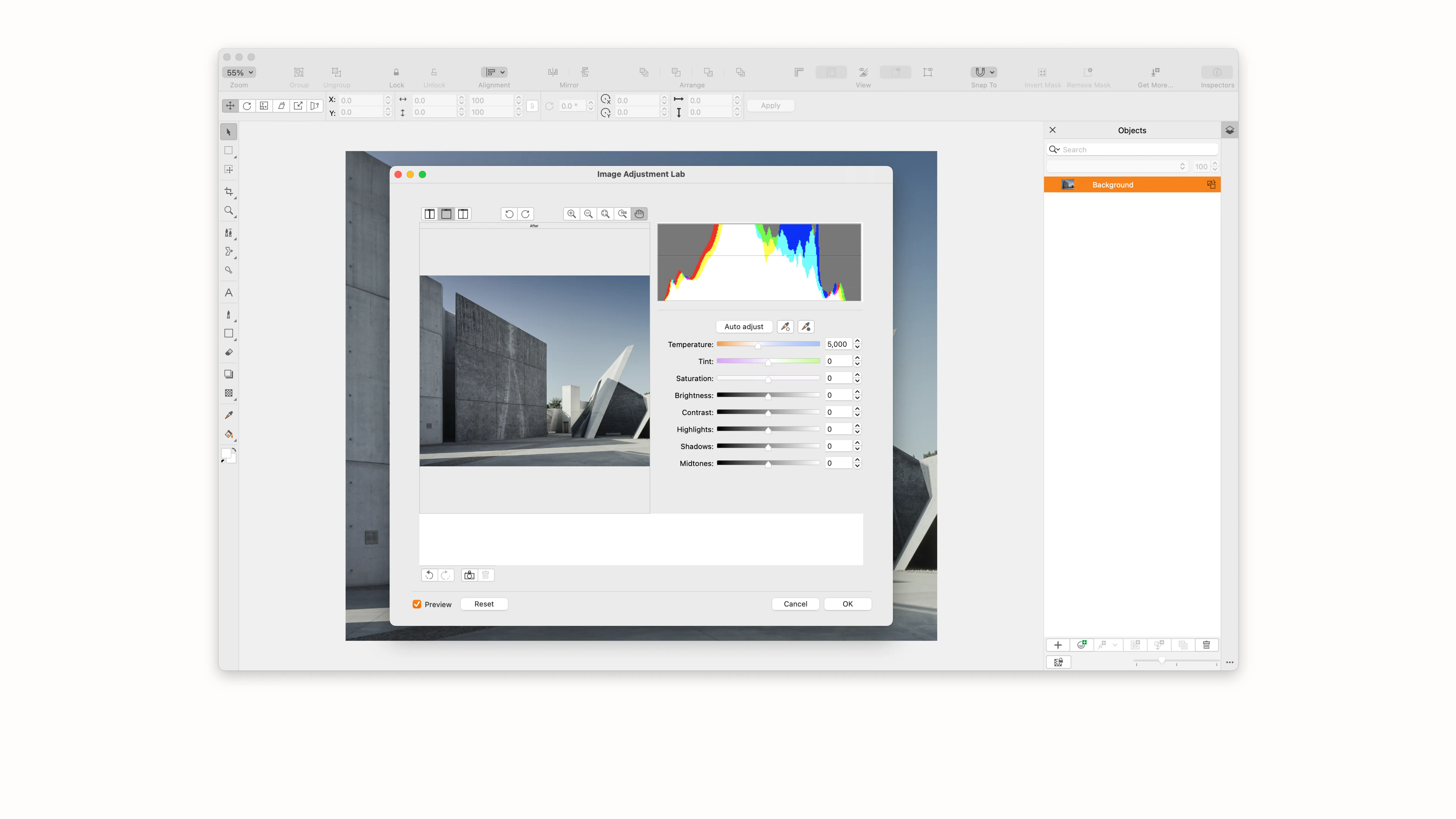
At the same time, Corel was transitioning CorelDRAW Graphics Suite from a perpetual licensing model to a subscription business. One challenge with this shift was that many customers already relied on Adobe Creative Cloud for portions of their image editing workflow.
As Corel moved toward subscriptions, customers who valued CorelDRAW but preferred image editing applications like Adobe Lightroom and Photoshop would have greater incentive to consolidate around Adobe rather than maintain subscriptions for two similar creative toolsets. PHOTO-PAINT’s declining relevance therefore posed a growing long-term risk to customer retention and the value of the suite.
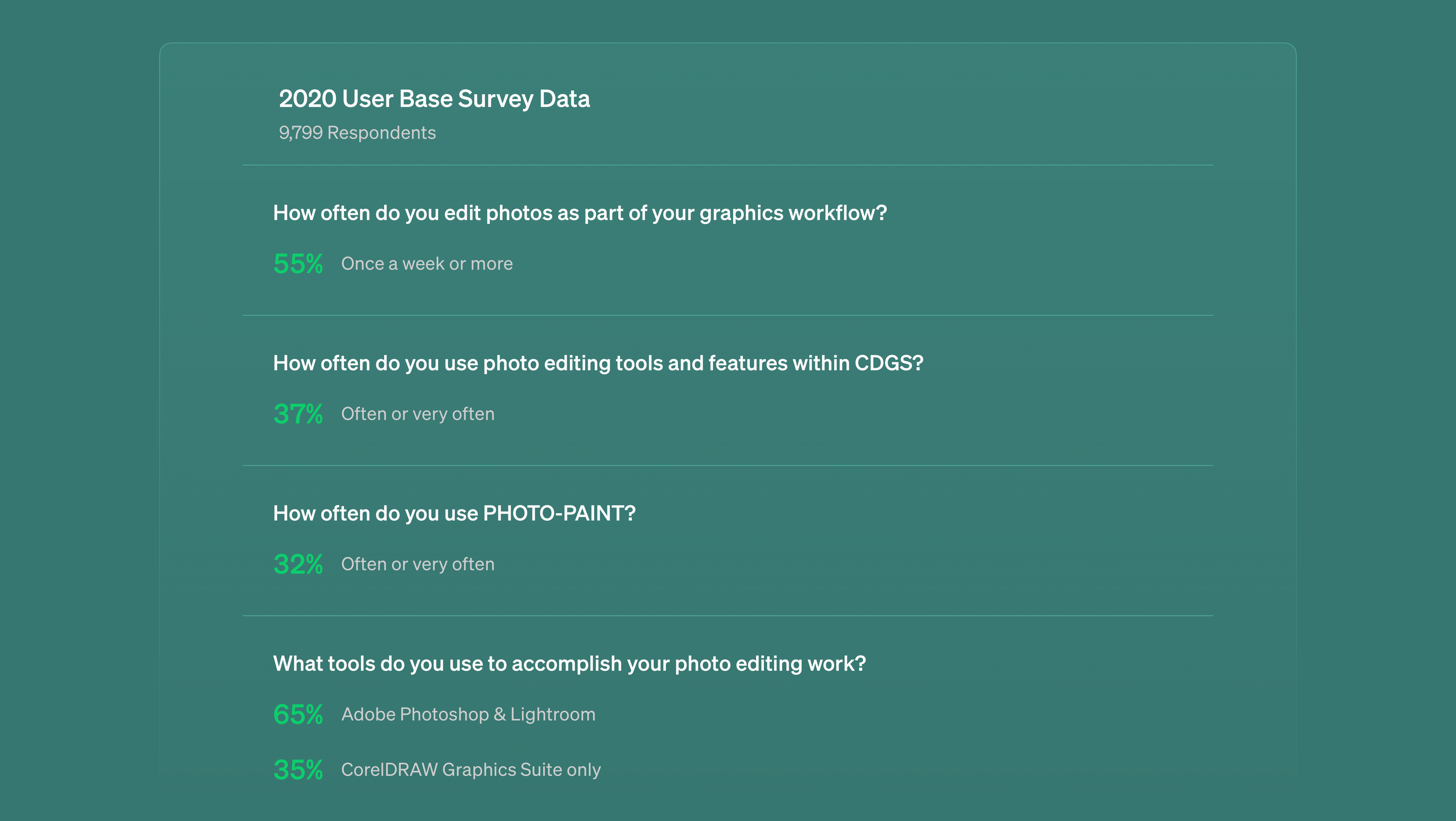
I saw an opportunity to address both the customer and business challenges by making the case for renewed investment in PHOTO-PAINT. Adjustments was one of the application’s most heavily used workflows and offered a tangible place to demonstrate what a modern photo editing experience could look like. Getting the organization behind the work required advocacy, stakeholder alignment, and a clear case for why the investment mattered. In 2020, I secured the support needed to begin this modernization effort.

APPROACH
Building the case for reinvestment
Before proposing solutions, I needed to better understand how users worked with PHOTO-PAINT and where it fell behind. I combined customer feedback, product analytics, competitive analysis, usability observations, and years of direct customer interaction to identify where existing workflows were breaking down.
I found that the problems extended beyond individual controls to the entire adjustment system. People moved through multiple tools to complete common editing tasks, often relying on step-intensive workarounds to preserve image integrity. The opportunity was therefore not simply to redesign individual dialogs, but to create a more cohesive model for making adjustments across an image.
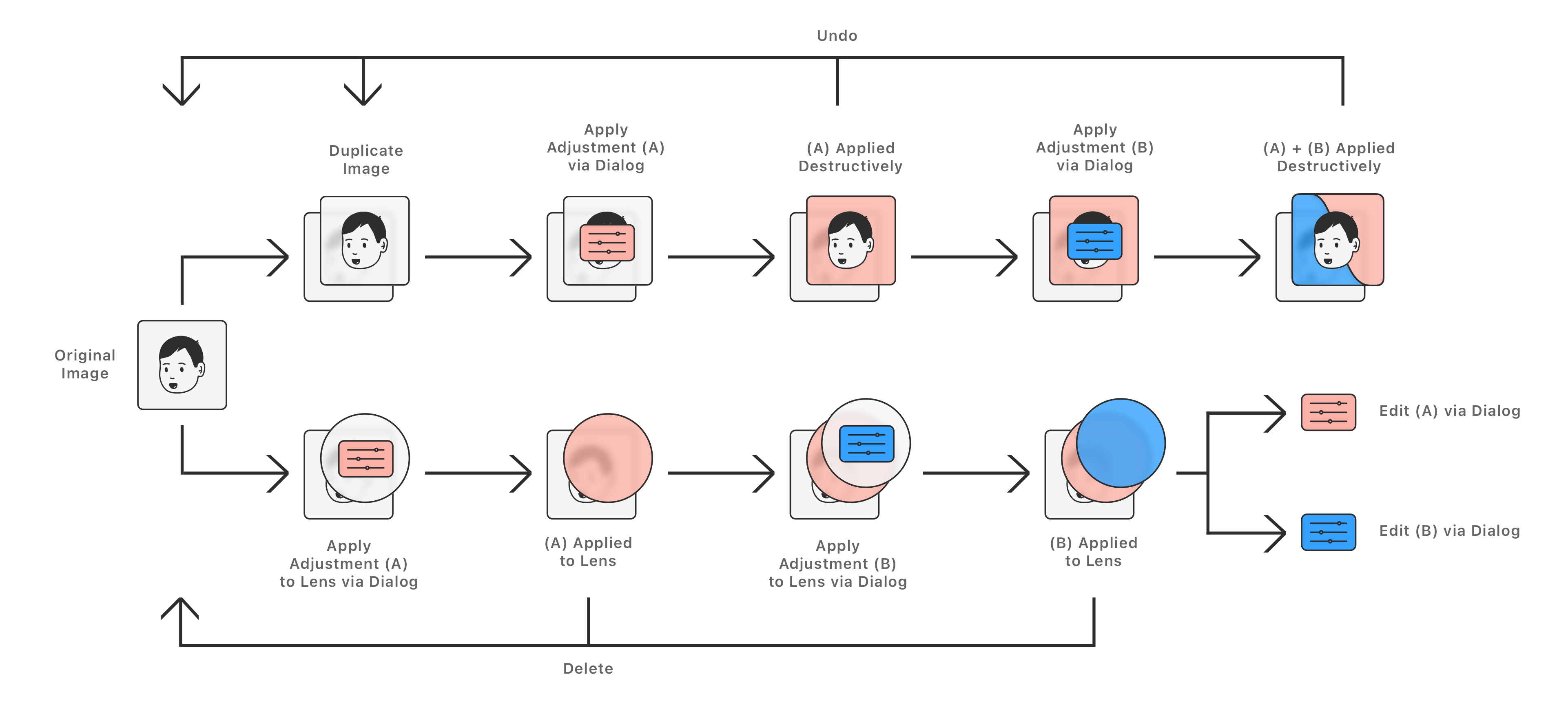
Modernizing a mature product and heavily used workflow meant balancing competing constraints. Technical limitations shaped what could be introduced and when. Long-time users depended on familiar workflows that couldn’t simply disappear. And continued investment required demonstrating enough value to justify the next step to internal stakeholders. I developed a phased roadmap centred on the goal of developing a non-destructive, contextual, and real-time photo editing experience.
This roadmap unfolded across three major releases. Each introduced a meaningful and marketable improvement or set of improvements that incrementally moved us closer to our goal while establishing the foundation for the next stage of the experience.
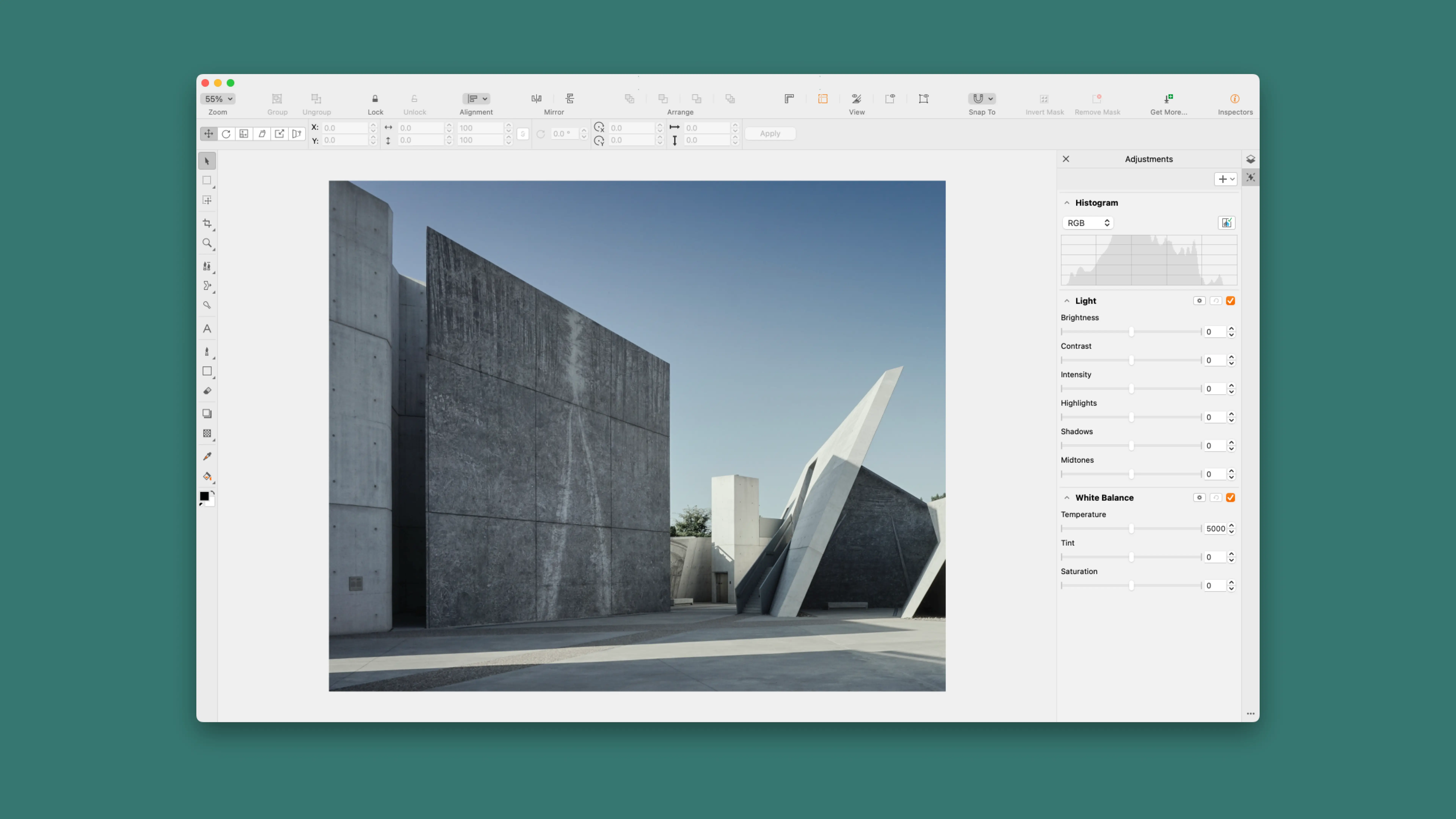
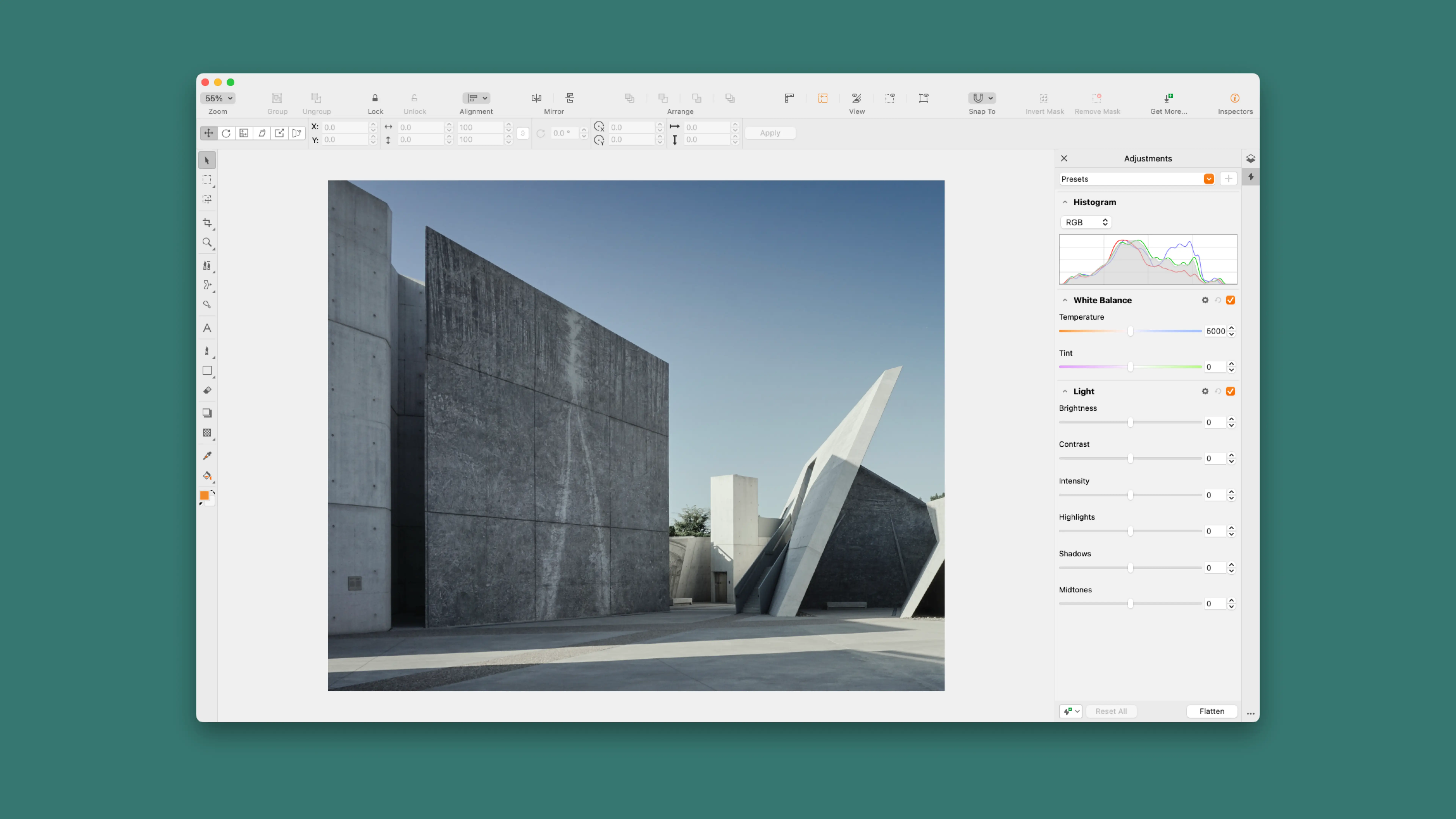
The 2020 release established non-destructive editing. In 2021, the most frequently used adjustment filters moved into the new contextual editing panel. The final release focused on completing the transition and making the experience responsive in everyday use. Improvements to display caching and multi-core processing made editing with adjustments up to ten times faster than the previous release.
IMPACT
Transforming the editing experience
From 2020 to 2022, PHOTO-PAINT evolved from a collection of isolated editing tools into a more cohesive image editing experience. The work introduced non-destructive editing, a contextual adjustments panel, rebuilt and enhanced filters, a new preset system, local adjustment editing, and substantial workflow, visual design, and performance improvements.
The transformation was deliberately incremental. Each release gave customers something meaningfully better while preserving the workflows they depended on and creating a foundation for the next stage of modernization.
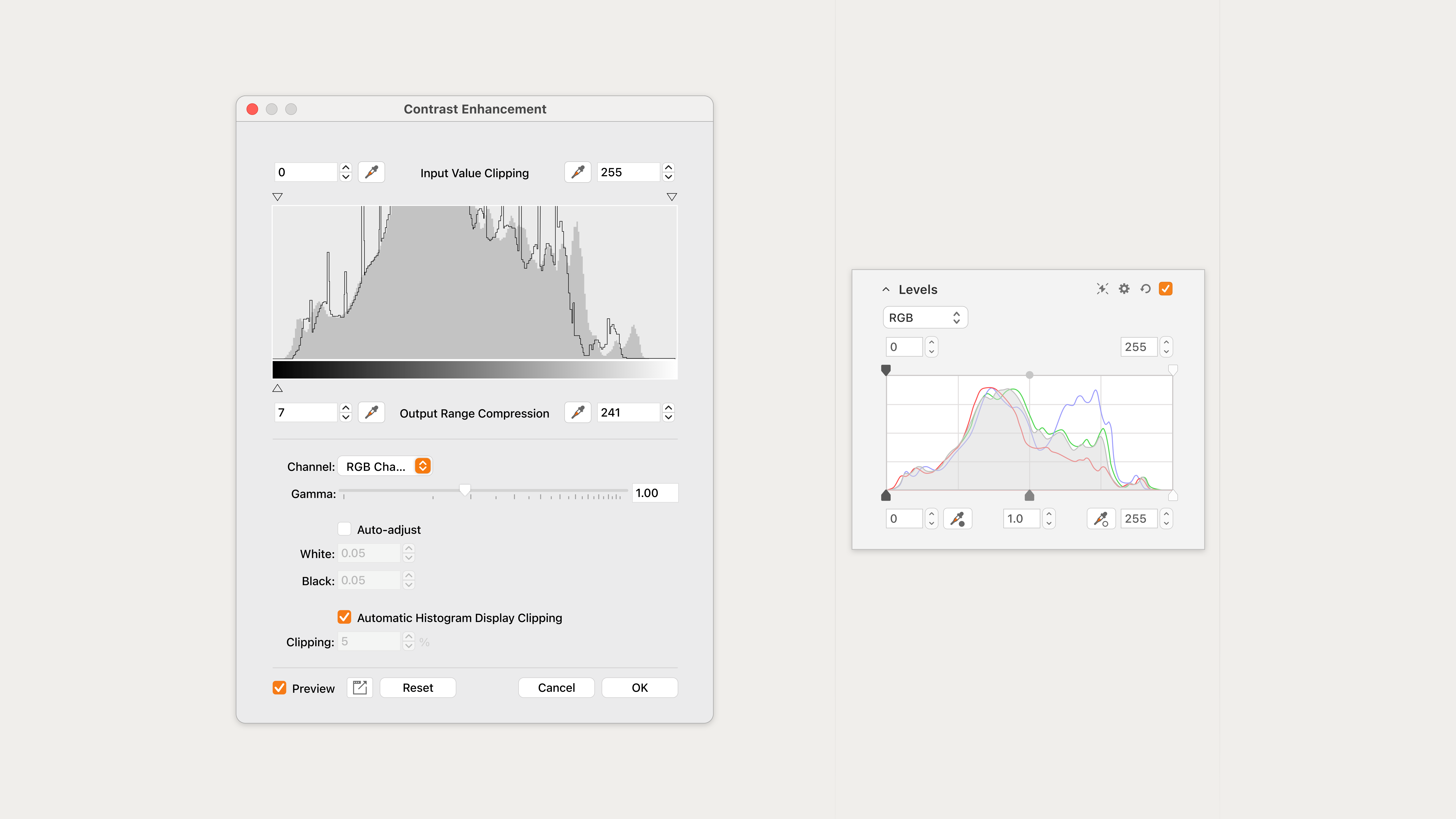
The most visible change was replacing the dialog editing workflow with a unified contextual Adjustments panel. This new tool gave users the ability to make multiple edits within a single workspace rather than opening modal windows one at a time, preview changes in real-time, save reusable presets, and continue refining images non-destructively without interrupting their creative flow.
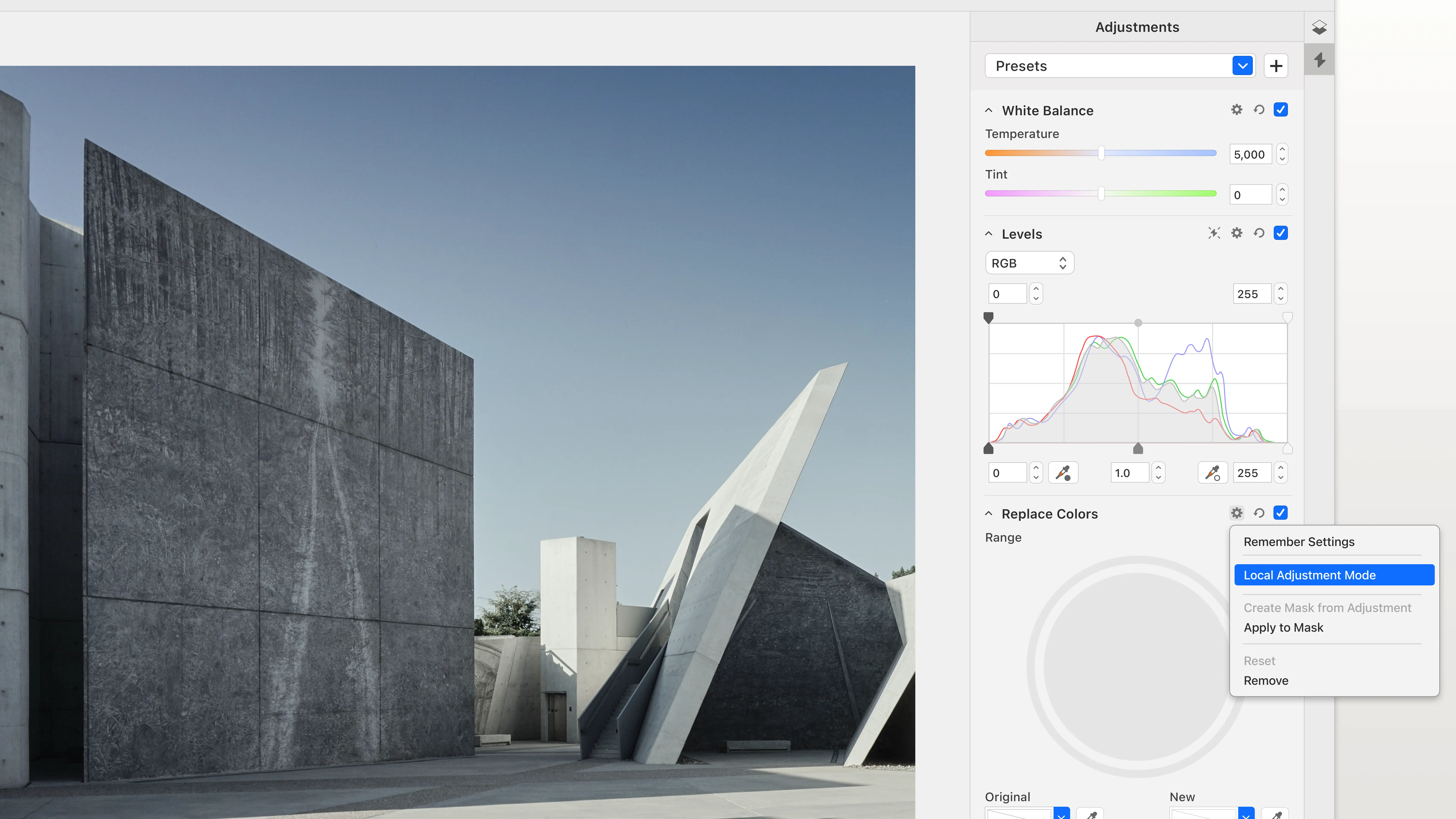
Adjustments demonstrated that a mature product did not need to be rebuilt from the ground up to deliver meaningful improvements. By combining a clear direction with incremental delivery while consistently advocating for PHOTO-PAINT’s users, we were able to modernize a critical workflow while preserving the expertise and habits that long-time customers had built around it.
More importantly, the work changed how the organization viewed PHOTO-PAINT. A product that had received limited investment in the years preceding 2020 to 2022 became a place where sustained design and development could demonstrate meaningful customer value and create momentum for further evolution.
“PHOTO-PAINT [PP] got a great deal of much needed love this version. Not all things have been fixed but it's real progress… I'd say the most extensive improvements in PP in decades.”